

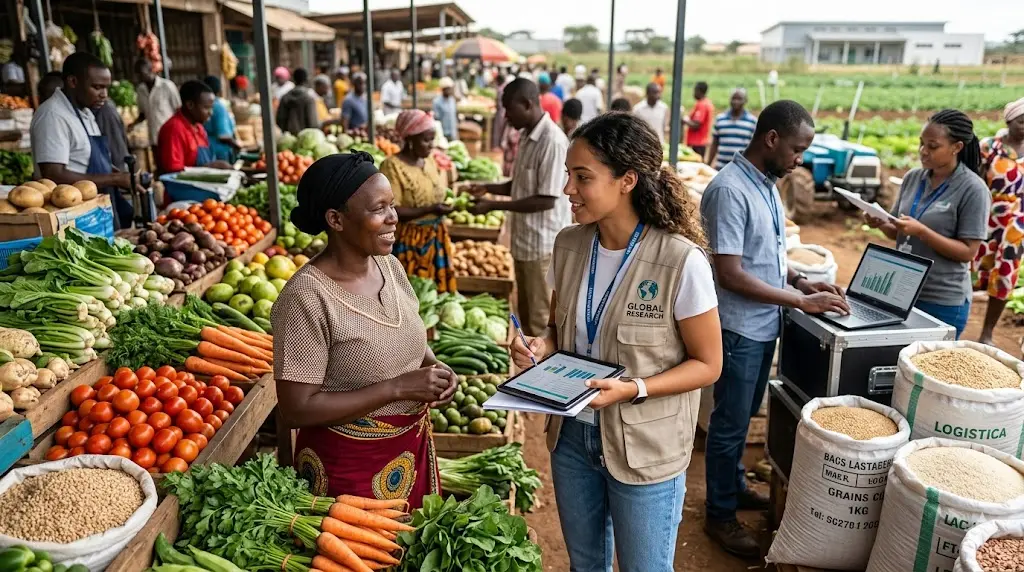
Global marketing research on food security and consumer engagement shows a major shift in how people buy, trust, and interact with food brands. Consumers now care about affordability, sustainability, transparency, and supply chain reliability almost as much as taste or convenience. Companies that understand these changing expectations are building stronger customer loyalty and long-term market growth.
Global marketing research on food security and consumer engagement reveals that consumers increasingly support brands offering transparent sourcing, ethical production, affordable pricing, and reliable food access. Businesses using trust-focused communication and consumer education strategies are more likely to improve loyalty, retention, and purchasing behavior in 2026 and beyond.
What Is Global Marketing Research on Food Security and Consumer Engagement?
Food Security: Reliable access to safe, nutritious, and affordable food that supports healthy living.
Global marketing research in this area examines how consumers respond to food shortages, pricing changes, sustainability concerns, agricultural technology, food distribution systems, and brand transparency.
Here's the thing — people don't buy food the same way they did ten years ago.
Consumers now ask deeper questions:
Where was this product sourced?
Why did prices increase?
Is the supply chain ethical?
Can this company actually deliver consistent quality?
That emotional and financial connection between food brands and consumers is becoming incredibly important.
Organizations such as Food and Agriculture Organization of the United Nations and World Food Programme continue researching how food systems, consumer behavior, and economic pressures interact globally.
Why Global Marketing Research on Food Security Matters in 2026
Food security has moved far beyond agriculture policy discussions.
Now it directly influences consumer trust, retail behavior, international marketing, and even investment decisions.
Rising Food Prices Are Changing Consumer Loyalty
Consumers used to stay loyal to brands for years. That's not always true anymore.
When grocery costs rise sharply, people compare prices aggressively and explore alternatives much faster than before.
In my experience, many businesses underestimate how quickly trust disappears when consumers feel manipulated by pricing strategies during food shortages or inflation periods.
That frustration spreads online almost instantly.
Consumers Want Transparency, Not Marketing Buzzwords
People are getting smarter about food marketing claims.
Labels like “natural,” “eco-friendly,” or “farm fresh” don't automatically build trust anymore unless companies provide real proof behind those statements.
What most people overlook is that modern consumers often research food sourcing before making purchasing decisions. That's especially true among younger buyers.
Brands that openly explain sourcing, production, and pricing decisions usually perform better over time.
Social Media Now Shapes Food Security Awareness
Food-related discussions spread globally within hours through digital platforms.
A supply chain disruption in one region can suddenly affect purchasing behavior worldwide because consumers see videos, reports, and price discussions online immediately.
Honestly, this creates enormous pressure on food companies to communicate clearly during shortages or disruptions.
Silence often damages brand reputation faster than the original problem itself.
Food Waste Has Become a Consumer Engagement Issue
Consumers increasingly care about food waste reduction.
Some companies now market imperfect produce, discounted near-expiry products, and sustainable packaging as part of broader engagement strategies.
That would've sounded strange twenty years ago.
Now consumers often reward brands showing realistic sustainability efforts instead of polished advertising campaigns.
Expert Tip
Food brands should communicate honestly during supply disruptions rather than hiding shortages or overpromising availability.
How Companies Improve Consumer Engagement Around Food Security
Strong consumer engagement depends on trust, clarity, and consistent communication.
1. Share Supply Chain Information Clearly
Consumers appreciate transparency regarding sourcing, farming methods, and distribution systems.
Simple explanations often work better than corporate jargon.
2. Use Localized Marketing Strategies
Food priorities vary across regions.
Some consumers focus heavily on affordability, while others care more about sustainability or organic sourcing. Smart brands adjust messaging accordingly.
3. Educate Consumers Instead of Selling Aggressively
Educational campaigns about nutrition, food production, storage, and sustainability tend to create stronger long-term loyalty.
People remember useful information.
4. Respond Quickly During Food Crises
Companies should address shortages, recalls, or pricing issues immediately and clearly.
Delayed communication damages trust.
5. Build Community-Focused Engagement
Partnerships with food banks, local farmers, schools, or nutrition programs often improve public perception while strengthening community relationships.
Consumers notice genuine involvement.
Expert Tip
Brands that admit temporary problems honestly usually recover consumer trust faster than companies trying to avoid accountability.
Common Misconception About Food Security Marketing
Consumers Only Care About Price
Price matters a lot. No question there.
But that's not the full story.
Research increasingly shows consumers also care about consistency, food quality, ethical sourcing, transparency, and safety standards.
Here's my hot take: some companies focus so heavily on discount pricing that they accidentally weaken long-term trust and brand identity.
Cheap prices alone rarely create lasting consumer loyalty anymore.
People want reliability too.
How Consumer Behavior Is Reshaping Global Food Markets
Consumer engagement now directly affects food production, retail strategy, and agricultural investment decisions.
A realistic example helps explain this.
Imagine a grocery company facing criticism over unclear sourcing practices during a supply shortage. Social media discussions escalate quickly, customers shift toward competitors with transparent communication, and investors begin questioning management decisions.
That scenario happens more often than many executives admit publicly.
Meanwhile, brands openly discussing sourcing challenges and sustainability efforts often gain stronger consumer support even during difficult periods.
That’s kind of counterintuitive, honestly.
People usually tolerate problems better when companies communicate openly.
Why Technology Plays a Bigger Role in Food Security
Digital tools increasingly shape how consumers evaluate food brands.
QR-code traceability systems, AI inventory management, blockchain tracking, and mobile shopping apps help businesses improve transparency and distribution efficiency.
At least from what I've seen, consumers don't necessarily care about the technical systems themselves. They care about what those systems provide:
Trust.
Availability.
Accuracy.
Reliability.
Technology becomes valuable when it solves real consumer concerns rather than acting like a flashy feature.
Expert Tip
Food companies investing in digital transparency tools should explain those systems in plain language consumers actually understand.
What the Future of Food Security Marketing Could Look Like
Food security marketing will probably become far more localized and personalized over the next decade.
AI-driven supply forecasting, region-specific pricing strategies, personalized nutrition recommendations, and real-time sourcing updates may become standard consumer expectations.
At the same time, public skepticism toward exaggerated sustainability claims will likely increase.
Personally, I think the most successful food companies won't necessarily be the biggest corporations. They'll probably be the businesses that consistently communicate honestly and adapt quickly to consumer concerns.
Trust is becoming a competitive advantage.
And honestly, that's overdue.
People Most Asked About Global Marketing Research on Food Security and Consumer Engagement
Why is food security important in marketing research?
Food security affects consumer trust, purchasing behavior, pricing sensitivity, and brand loyalty across global markets.
How does consumer engagement impact food companies?
Strong engagement improves customer retention, brand reputation, and long-term sales growth through trust and transparency.
What role does technology play in food security?
Technology improves supply chain tracking, inventory management, sourcing transparency, and communication between companies and consumers.
Why are consumers demanding more transparency?
Consumers increasingly want proof regarding sourcing, sustainability, pricing fairness, and production practices before supporting food brands.
How does social media affect food security discussions?
Social media spreads information about shortages, pricing changes, recalls, and ethical concerns very quickly, influencing public perception and purchasing behavior.
What industries are affected by food security research?
Retail, agriculture, logistics, hospitality, technology, government policy, and global trade sectors all depend heavily on food security trends.
Are younger consumers more concerned about food transparency?
Yes. Younger demographics often research sourcing practices, sustainability efforts, and ethical standards before making purchasing decisions.
Will food security become a bigger marketing issue in the future?
Very likely. Climate challenges, inflation, population growth, and supply chain disruptions continue increasing global concern about food access and reliability.
Businesses, startups, agencies, and SEO professionals looking to expand brand visibility can strengthen online growth through trusted press release distribution services alongside advanced local SEO services designed to improve SEO ranking, media coverage, organic traffic, instant publishing, and high authority backlinks across competitive digital markets.