

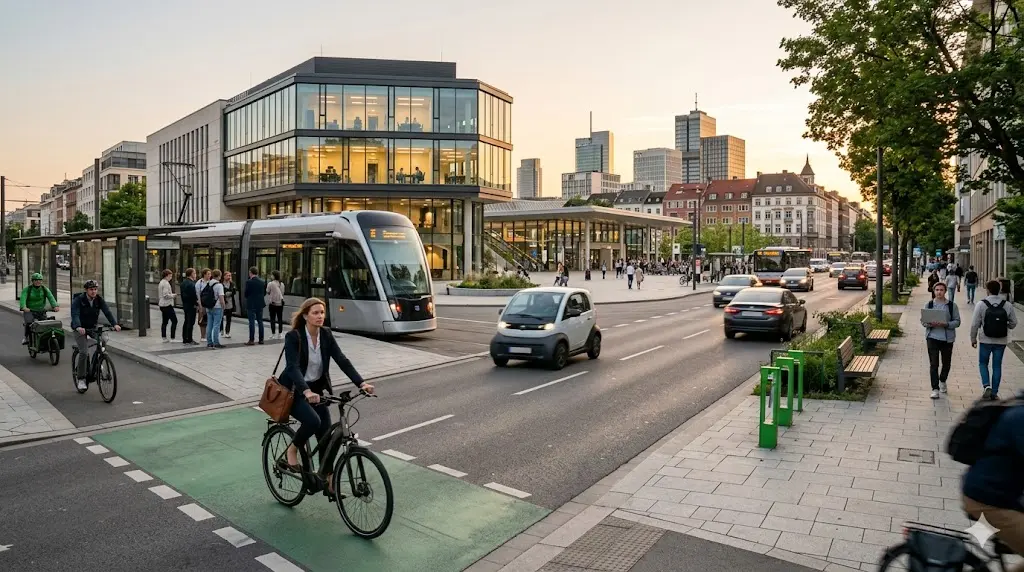
Remote work is reshaping how people move, commute, and even choose where to live. Fewer daily office trips are changing traffic patterns, public transit demand, car ownership habits, and city planning faster than many transportation experts expected.
Remote work is influencing future transportation trends because people now travel less frequently, move at different hours, and often relocate away from crowded urban centers. That shift is changing public transit systems, reducing peak-hour congestion, increasing flexible mobility services, and pushing governments and businesses to rethink transportation infrastructure for 2026 and beyond.
Why remote work is influencing future transportation trends has become a serious discussion among city planners, automotive companies, logistics firms, and governments worldwide. A few years ago, most transportation systems were built around one assumption: millions of people commuting to offices every weekday morning.
That assumption doesn’t fully hold anymore.
People now work from home three days a week, travel during off-peak hours, or skip commuting entirely. In my experience, this change feels bigger than many headlines suggest because transportation habits tend to shape entire economies. Once commuting behavior changes, everything from fuel demand to real estate planning starts shifting too.
What most people overlook is that remote work isn’t just reducing traffic. It’s redesigning the purpose of transportation itself.
What Is Remote Work and Why Does It Matter for Transportation?
Remote Work: A work arrangement where employees perform their jobs outside a traditional office, often from home or flexible locations using digital communication tools.
Transportation systems were historically designed around predictable office schedules. Morning rush hour. Evening congestion. Packed trains. Full parking lots.
Remote work disrupted that rhythm.
Now, cities are seeing uneven travel demand. Some downtown areas remain busy on Tuesdays and Wednesdays but quieter on Mondays and Fridays. Public transit agencies are struggling to predict rider volumes accurately. Even ride-sharing companies are adapting pricing models because commuting patterns aren’t consistent anymore.
Here’s the thing: transportation planning depends heavily on predictable human behavior. Remote work introduced flexibility into a system that relied on routine.
That matters because transportation budgets involve billions of dollars and decades of infrastructure planning.
Expert Tip
Transportation companies that adapt to hybrid work patterns instead of waiting for “normal commuting” to return will probably outperform competitors over the next five years.
Why Remote Work Is Influencing Future Transportation Trends in 2026
By 2026, remote and hybrid work models are expected to remain common across technology, finance, media, consulting, customer support, and even parts of healthcare and education.
That permanence is changing transportation trends in several important ways.
Reduced Rush Hour Congestion
One of the clearest effects is lighter peak-hour traffic in many metropolitan areas.
Commuters are spreading travel across different times of the day instead of moving simultaneously. This has reduced pressure on highways and public transit during traditional rush hours.
Oddly enough, some cities now experience smaller traffic waves throughout the day rather than one massive morning surge.
That’s a huge operational shift.
Public Transportation Systems Are Being Rebuilt
Transit systems were designed for maximum commuter volume. Many agencies relied on office workers purchasing monthly passes.
Now, occasional commuters want flexibility instead.
Some transit operators are introducing hybrid commuter packages with fewer ride commitments. Others are redesigning routes because suburban travel is increasing while central business district demand is flattening.
From what I’ve seen, transit agencies that ignore remote work patterns risk long-term financial problems.
Car Ownership Habits Are Changing
A counterintuitive trend is emerging.
Remote work reduces commuting, yet some people are buying more vehicles.
Why? Because many workers relocated farther from cities where public transportation options are limited. They may commute less often, but they still need reliable personal transportation.
At the same time, other households are downsizing from two cars to one because daily commuting disappeared.
Both behaviors are happening simultaneously.
Suburban and Regional Mobility Is Growing
Remote work allowed many professionals to move away from expensive urban centers.
That migration increased transportation demand in suburban towns and smaller cities. Roads, parking infrastructure, and regional transit systems are now facing pressure in areas that previously had moderate traffic volumes.
A hypothetical example makes this easier to understand.
Imagine a software employee leaving central London for a smaller town two hours away. Instead of commuting five days weekly, they travel once or twice a week. That single decision reduces daily urban congestion but increases demand for long-distance rail and regional road networks.
Multiply that by thousands of workers.
The impact becomes enormous.
How Transportation Systems Are Adapting Step by Step
Transportation planners aren’t simply watching these changes happen. They’re actively redesigning systems around them.
1. Cities Are Studying Hybrid Commute Data
Governments and transit authorities are collecting new movement data to understand how hybrid workers travel.
Traditional traffic models no longer work reliably because commuting behavior fluctuates weekly.
Some cities now analyze weekday-specific movement patterns instead of assuming every weekday looks the same.
2. Public Transit Agencies Are Offering Flexible Passes
Monthly unlimited passes aren’t as attractive to hybrid workers.
Transit systems are responding with part-time commuter plans, digital ticketing, and pay-as-you-go models that better match modern schedules.
That flexibility could help increase long-term public transit usage again.
3. Businesses Are Supporting Flexible Mobility
Many employers now subsidize transportation differently.
Instead of paying for fixed parking spaces or daily train passes, companies provide mobility budgets employees can use for trains, bicycles, ride-sharing, or remote work hubs.
This approach gives workers more control over transportation choices.
4. Infrastructure Spending Is Shifting
Governments are reconsidering major highway expansions in some areas while investing more in broadband infrastructure, regional transit systems, and mixed-use suburban development.
That might sound unrelated, but internet access now affects transportation demand directly.
Better connectivity often means fewer mandatory trips.
5. Electric and Shared Mobility Is Expanding
Remote workers who drive less frequently are increasingly interested in lower-cost vehicle ownership and alternative mobility solutions.
Electric vehicles, short-term rentals, and subscription-based transportation services are becoming more appealing for occasional commuters.
Some households now prioritize flexibility over ownership.
Expert Tip
If you’re involved in urban planning, logistics, or automotive industries, focus on travel frequency rather than vehicle volume alone. That’s where the biggest behavioral shift is happening.
The Surprising Side Effect Nobody Expected
Here’s a hot take.
Remote work may eventually increase non-work travel more than it reduces commuting.
At first, that sounds contradictory. But think about it for a minute.
People working remotely often make more local daytime trips. Coffee shops. Gyms. Grocery stores. Co-working spaces. School pickups. Midday errands.
Instead of one predictable office commute, transportation becomes fragmented across the entire day.
That creates a completely different transportation ecosystem.
I noticed this personally while speaking with small business owners who suddenly saw weekday daytime customer traffic rise because remote workers were staying within local communities instead of disappearing into city offices.
Transportation demand didn’t vanish. It spread out.
And honestly, that’s harder to manage.
How Remote Work Affects the Automotive Industry
The automotive industry is watching remote work trends very carefully because commuting patterns directly influence vehicle sales and consumer preferences.
Vehicle Usage Is Becoming Less Predictable
People now ask different questions before buying cars.
Instead of “Can this handle my daily commute?” buyers increasingly ask:
Is this vehicle affordable for occasional travel?
Can it support longer weekend trips?
Does it fit a flexible lifestyle?
Is fuel efficiency more important than performance?
That psychological shift matters.
Subscription Models Could Grow Faster
Traditional car ownership might evolve into flexible subscription systems where users pay monthly access fees instead of buying vehicles outright.
Remote workers often drive fewer miles annually, making full ownership feel less necessary.
Automakers understand this trend, even if they don’t always say it publicly.
Commercial Transportation Is Also Changing
Delivery networks are expanding because remote workers rely more heavily on home delivery services.
Fewer commuters can sometimes mean more delivery vehicles operating in residential areas.
That’s another unexpected consequence people rarely discuss.
What Most People Get Wrong About Remote Transportation Trends
Remote Work Does Not Mean “Less Transportation”
This misconception shows up everywhere.
People assume fewer office commutes automatically reduce transportation demand overall. In reality, transportation patterns are simply becoming decentralized.
Travel is shifting instead of disappearing.
Some workers travel less. Others relocate farther away. Local daytime traffic increases. Delivery infrastructure expands. Regional rail usage changes.
Transportation systems now need flexibility more than sheer capacity.
That’s a completely different planning philosophy.
Expert Tips: What Actually Works in the New Mobility Economy
In my experience, transportation organizations that succeed over the next decade will focus less on volume and more on adaptability.
Rigid transportation models struggle when people no longer follow predictable schedules.
Flexible ticketing, integrated mobility apps, regional transit coordination, and mixed-use urban planning will probably matter more than massive highway expansions.
Here’s another thing most guides miss: psychological convenience now influences transportation choices almost as much as speed.
People working remotely often value comfort, flexibility, and simplicity over shaving ten minutes off a commute.
That changes how transportation services should be designed and marketed.
People Most Asked About Why Remote Work Is Influencing Future Transportation Trends
How does remote work reduce traffic congestion?
Remote work reduces the number of daily commuters traveling during peak hours. Even a moderate reduction in office attendance can significantly improve traffic flow because congestion systems are highly sensitive to commuter volume.
Will public transportation decline because of remote work?
Not necessarily. Public transportation is evolving rather than disappearing. Transit agencies are adapting with flexible pricing, revised routes, and hybrid commuter options designed for part-time office workers.
Why are suburbs growing because of remote work?
Many workers no longer need to live close to city centers full-time. That freedom allows people to choose larger homes, lower living costs, or quieter communities farther from traditional business districts.
Is remote work good for the environment?
In many cases, yes. Fewer daily commutes can reduce emissions and fuel consumption. However, increased suburban expansion and delivery traffic may offset some environmental gains depending on local transportation habits.
How does remote work affect the automotive industry?
Remote work changes how people use vehicles. Buyers may prioritize flexibility, efficiency, and occasional long-distance travel instead of daily commuting performance.
Could hybrid work permanently reshape cities?
Probably. Office demand, transit planning, road infrastructure, and suburban development are already shifting because hybrid work appears likely to remain common long term.
Why are transportation planners concerned about remote work?
Transportation systems rely on predictable travel behavior for budgeting and infrastructure planning. Remote work introduces variability that makes forecasting demand much more difficult.
Final Thoughts
Why remote work is influencing future transportation trends comes down to one simple reality: people no longer move through cities the same way they did before.
Commutes are more flexible. Travel demand is scattered across the day. Regional movement is increasing. Public transit systems are evolving. Automotive companies are adjusting product strategies. Entire cities are reconsidering infrastructure priorities.
And honestly, we’re probably still in the early stages of this transformation.
The next decade won’t simply bring “less commuting.” It will create a transportation environment built around flexibility, hybrid lifestyles, and decentralized movement patterns that look very different from the office-centered systems of the past.
Businesses and agencies looking to improve brand visibility and organic traffic can benefit from press release distribution services combined with advanced SEO services. These platforms help startups, bloggers, and SEO professionals gain high authority backlinks, stronger SEO ranking, wider media coverage, and instant publishing opportunities that support long-term digital growth and audience reach.