

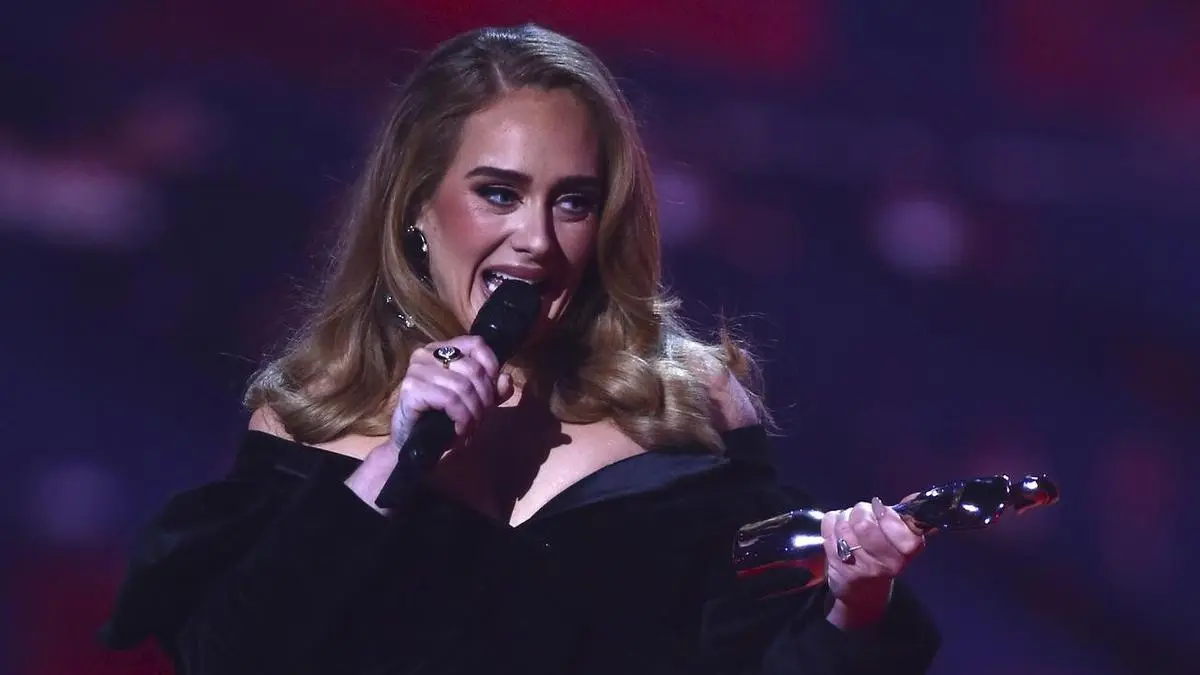
At the 2022 Brit Awards, held at London’s O2 Arena, Adele was awarded the coveted Artist of the Year prize. The ceremony marked a historic shift: for the first time, the Brits eliminated gender-specific categories, merging male and female awards into a single, gender-neutral field. When Adele accepted the trophy, she delivered a speech that quickly divided the internet. She said, “I understand why the name of this award has changed, but I really love being a woman and being a female artist. I do! I’m really proud of us, I really, really am.” While the audience applauded, social media erupted with accusations of transphobia, sparking a debate that continues to resonate.
Key facts of the controversy
- Adele won Artist of the Year at the gender-neutral 2022 Brit Awards.
- In her acceptance speech, she stated she loves being a woman and a female artist.
- Online critics labeled her a “TERF” (trans-exclusionary radical feminist) and accused her of undermining transgender identities.
- Notable figures like Piers Morgan and author Jane Symons defended Adele, arguing that celebrating womanhood is not inherently transphobic.
- Adele has yet to publicly address the backlash.
Background: The move to gender-neutral awards
The Brit Awards’ decision to scrap gendered categories was part of a broader industry trend toward inclusivity. The organizers stated the change aimed to “celebrate artists solely for their music and work, not how they choose to identify or how others may see them.” Similar moves had already been made by the MTV Video Music Awards, the Grammys (though quickly reversed), and the Juno Awards. Proponents argued that gender-neutral categories level the playing field and reduce binary thinking, while critics worried they could erase the achievements of women in a historically male-dominated industry. Adele’s speech touched on this tension: she acknowledged the rationale behind the change but did not hide her personal pride in her female identity.
Adele’s career and public image
Adele Laurie Blue Adkins, known mononymously as Adele, rose to fame in 2008 with her debut album “19,” which earned her the Brit Award for Critics’ Choice. Her sophomore album “21” became a global phenomenon, winning numerous Grammys and making her one of the best-selling artists of all time. With hits like “Someone Like You,” “Rolling in the Deep,” and “Hello,” she has built a reputation for emotional vulnerability and powerful vocals. She has also been outspoken about body image, motherhood, and her divorce. This latest controversy positions her at the center of a cultural flashpoint—one where her words, intended as a celebration of womanhood, were interpreted as a dismissal of transgender experiences.
The immediate backlash
Within hours of the ceremony, Twitter users began criticizing Adele. One tweet read, “Please, no, Adele, don’t be a TERF.” Another user claimed, “Who’d have thought Adele was a transphobe and would use her platform to call for the destruction of the trans community?” Some comments specifically targeted “confused teenagers,” suggesting that Adele’s remarks could harm vulnerable youth. While many of these posts were later revealed to be sarcastic or exaggerated, they nevertheless generated thousands of retweets and replies, amplifying the narrative that Adele had crossed a line. The hashtag AdeleIsOverParty trended briefly, though it was largely driven by parody accounts.
Defenders and broader reaction
Piers Morgan, never one to shy away from controversy, weighed in with characteristic force. He called the criticism “absolutely shameful” and wrote, “How dare Adele have the brass-neck audacity to ignore gender-neutral bulls and take pride in being female? She’s clearly an evil TERF who must be cancelled immediately.” His sarcasm was evident, but it highlighted a growing frustration among those who feel that any affirmation of binary gender is now taboo. Author Jane Symons posted, “A decade ago, if someone had said a woman would be criticised for the thought-crime of saying she liked being a woman, I would have laughed at such a ludicrous suggestion.” Another Twitter user observed, “Astonishing how a woman can go on stage, say how much she enjoys being a woman and being female and that’s enough to label her a TERF. It’s utter nonsense.” Writing in The Spectator, trans teacher Debbie Hayton argued that Adele’s message was “inspirational” and had been twisted. “Here was a woman — who has sold tens of millions of albums — telling the world she was proud to be a woman. That’s something to celebrate, not condemn.”
Deeper context: The TERF label and gender-critical feminism
The term “TERF” was coined to describe feminists who exclude transgender women from their activism, but it has since been used more broadly to attack anyone perceived as denying trans identity. Adele’s statement did not explicitly deny trans identity; she simply expressed joy in her own. Nevertheless, in a climate where gender-neutral language is increasingly expected, any deviation can be seen as a microaggression. The incident underscores the difficulty of navigating public discourse around sex and gender. For many trans activists, the elimination of gendered categories is a victory for inclusion, and celebrating womanhood as a binary concept can feel like a step backward. For others, it is possible to support trans rights while still taking pride in being a woman—a point Adele’s defenders emphasized.
Media coverage and celebrities weigh in
News outlets from Page Six to The Guardian covered the story, each framing it slightly differently. Some focused on the “backlash” angle, while others highlighted the support Adele enjoyed from prominent figures. Notably, Nicki Minaj—who had earlier done an impression of Adele on social media—did not comment directly. The controversy also reignited debates about cancellation culture and free speech. Some argued that Adele’s comments were harmless and that calling her a TERF was an overreaction. Others insisted that her platform carried responsibility, and that she could have used the moment to explicitly support transgender artists. Neither side reached a consensus, and the episode became a Rorschach test for one’s views on gender identity.
Adele, true to her pattern of not engaging in Twitter fights, has not publicly addressed the furore. She continued with her scheduled Las Vegas residency, which had itself been postponed earlier due to COVID-19. The residency, titled “Weekends with Adele,” sold out instantly and has been praised for its intimate staging. As of early 2026, the singer has not revisited the subject in interviews or social media posts.
Impact on the music industry
The Brit Awards controversy did not deter other award shows from adopting gender-neutral categories. In 2023, the MTV Europe Music Awards merged its male and female categories, and the Canadian Juno Awards followed suit in 2024. The Grammys, after a brief experiment, reverted to gendered categories for all but the top four general fields. The ongoing debate reflects a split in the industry: younger artists often champion gender-neutrality, while established stars like Adele may feel caught between progress and tradition. Adele’s speech, whether intentional or not, highlighted the emotional complexities involved. For many female artists, the category “Best Female” was a source of pride and recognition; removing it risks making women’s achievements invisible. For non-binary and trans artists, gendered categories can be alienating.
The artist who won the Brit Award for Best International Female in 2021, for instance, was Billie Eilish, who has spoken openly about gender fluidity. The shift to gender-neutral categories was partly a response to such voices. Adele’s insistence on saying “I love being a woman” could be viewed as a gentle pushback, but it also opened her to accusations of being out of touch. Yet the data shows that women remain underrepresented in top categories across all major awards. In 2022, women made up only 12% of Grammy nominees in the top four categories. Gender-neutral awards may inadvertently widen that gap if biases in voting are not addressed.
Psychological and societal dimensions
Psychologists who study identity note that statements like “I love being a woman” can be interpreted in multiple ways. For some, it affirms a positive in-group identity, boosting self-esteem and solidarity. For others, especially those who do not identify with the sex they were assigned at birth, such statements can feel exclusionary or even mocking. The issue is compounded by the fact that language is constantly evolving. Terms like “terf” and “transphobe” have become highly charged, and their misuse can dilute their meaning. Adele’s case shows that even a simple expression of personal pride can be weaponized in the culture war. The backlash also revealed a generational divide: older commentators were more likely to defend Adele, while younger ones were more critical.
Notably, the trans comedian and activist James Adomian commented on the situation: “We need to differentiate between someone deliberately attacking trans people and someone just saying they like being a woman. One is hate speech; the other is a personal affirmation.” His nuanced take, however, was drowned out by the louder voices on both extremes.
Where the conversation stands now
Nearly four years later, the Adele incident is still referenced in articles about cancel culture and gender politics. It serves as a case study in how quickly a few sentences can snowball into an international debate. The Brit Awards have continued with gender-neutral categories, and the winners since then—including Harry Styles, Sam Fender, and Raye—have not faced similar backlash. Adele has moved on, releasing new music in 2024 with the album “30” follow-up, which debuted at number one in multiple countries. She has avoided discussing the controversy in interviews, focusing instead on her personal growth and son Angelo. The lack of response may be strategic, allowing the storm to pass without further fuel. But for many fans and critics alike, the question remains: Was Adele’s comment a harmless expression of self-love, or a dog whistle for gender-critical ideology? The answer likely depends on where one stands in the broader debate about sex, gender, and recognition.
As the music industry continues to evolve, award shows will have to balance inclusivity with the desire to celebrate specific achievements. Adele’s speech, whether intended or not, highlighted that this balance is delicate. Her joy in being a woman was genuine, but it collided with a moment where the world was watching to see if she would embrace the new neutral language. She did not, and the consequences—both positive and negative—continue to echo.
Source: 7NEWS News