

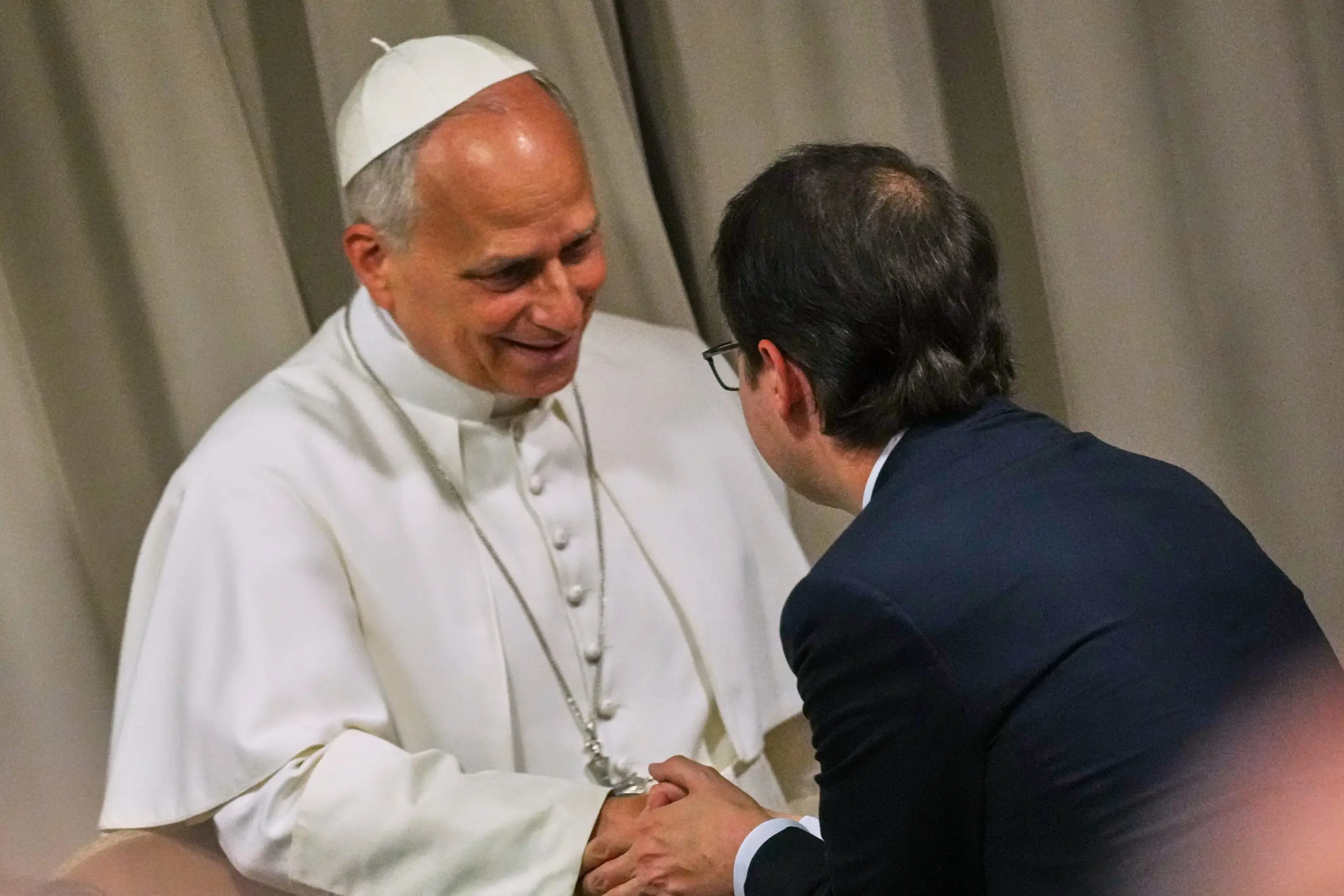
Pope Leo XIV has released his first encyclical letter, titled Magnifica Humanitas ("Magnificent Humanity"), a sweeping document that confronts the moral and social implications of artificial intelligence, the concentration of power, and the erosion of human dignity in the modern world. Signed on May 15, the 135th anniversary of Pope Leo XIII’s landmark social encyclical Rerum Novarum, the new letter positions Leo XIV as a pope deeply committed to social justice and the church’s evolving response to technological transformation.
The encyclical, comprising an introduction, five chapters, and a conclusion, is both a reflection on the current state of humanity and a call to action. Pope Leo XIV frames the discussion around two contrasting biblical images: the Tower of Babel, representing projects built without God that lead to division and uniformity, and the rebuilding of the walls of Jerusalem described in the Book of Nehemiah, symbolizing collaborative work centered on God that restores relationships and justice.
"Humanity, created by God in all its grandeur, is today facing a pivotal choice: either to construct a new Tower of Babel or to build the city in which God and humanity dwell together," the pope writes in the introduction. He warns against a "Babel syndrome" driven by profit idolatry, uniformity that suppresses diversity, and the reduction of human mystery to data and performance. Instead, he urges embracing the "way of Nehemiah," emphasizing shared responsibility and working together for the common good.
Foundations of Social Doctrine
The first chapter of Magnifica Humanitas traces how Catholic social teaching has developed from the time of Pope Leo XIII through the Second Vatican Council and recent pontificates. Pope Leo XIV clarifies that the church does not seek to replace the state but must raise its voice when human dignity is violated, politics fails, or science oversteps ethical bounds. The social doctrine of the church, rooted in Scripture and tradition, provides a framework for interpreting contemporary challenges, especially those posed by artificial intelligence.
In the second chapter, the pope enumerates five foundational principles: the common good, universal destination of goods, subsidiarity, solidarity, and social justice. He emphasizes that every person possesses inalienable dignity created in God’s image, and this dignity grounds human rights. He highlights the need to extend the principle of universal destination to new forms of property such as algorithms, digital platforms, and data. Subsidiarity, he argues, applies especially to major technology companies that exercise de facto power over daily life, demanding transparency and accountability. Solidarity requires that decisions about AI consider impacts on all peoples and future generations. Social justice today is tested by the treatment of migrants, refugees, and those displaced by climate change.
Technology, Dominance, and the Promise of AI
Building on Pope Francis’ critique of the "technocratic paradigm" in Laudato Si’, Leo XIV devotes the third chapter to examining how artificial intelligence, combined with cognitive science, nanotechnology, and robotics, has spread this paradigm. He warns against equating machine intelligence with human intelligence and stresses that AI systems merely imitate certain functions. When decisions about people’s lives are delegated to algorithms that lack compassion, mercy, or forgiveness, new forms of exclusion emerge.
"We cannot consider AI to be morally neutral," the pope writes. Ethical discernment must examine the vision of the human person embedded in data and models. He calls for "disarming AI" — not rejecting technology, but freeing it from monopolistic control and the mentality of armed competition that pervades economic and geopolitical domains. This disarmament includes rejecting the assumption that technical power confers the right to govern.
Leo XIV also critiques transhumanism and posthumanism as expressions of an "inhuman vision" that treats human limitations as defects to be corrected. He argues that humanity flourishes not despite limitations but often through them, and eliminating suffering entirely would extinguish love and desire.
Truth, Work, and Freedom in the Digital Age
In the fourth chapter, the pope explores how digital transformation affects truth, work, and freedom. He decries the use of AI to amplify disinformation, blur facts and opinions, and undermine democratic institutions. Indifference to truth, he warns, leads toward totalitarianism. He advocates for an "ecology of communication" that includes serious journalism and forums for debate.
On work, Leo XIV builds on the church’s long tradition from Rerum Novarum to emphasize that the fourth industrial revolution must be centered on the human person, not solely on performance. The automation of jobs and the outsourcing of human input to low-wage workers — often including children in mineral extraction and young women training AI models — constitute "new forms of slavery." The pope includes an unprecedented apology for the church’s historical slowness in condemning slavery, calling this memory a "call to vigilance" against modern exploitation. He also notes that colonialism now assumes new forms, appropriating data and transforming personal lives into exploitable information.
The Culture of Power and Civilization of Love
The final chapter, arguably the most striking, addresses war and the culture of power. Pope Leo XIV argues that technology detached from ethics has made decisions about life and death more rapid and impersonal, lowering the threshold for the use of force. He sees the modern Babel in the clash of imperialisms and multiple conflicts, but also glimpses a "civilization of love" built by those striving to remain human.
The pope denounces the "military-industrial complex" that profits from wars, the evolution of nuclear arsenals, and the development of AI weapons systems. He states unequivocally: "It is not permissible to entrust lethal or otherwise irreversible decisions to artificial systems. No algorithm can make war morally acceptable." He declares that the "just war" theory, often misused, is now outdated, and that humanity possesses more effective tools: dialogue, diplomacy, and forgiveness. He criticizes Realpolitik and a false realism that resigns people to the inevitability of war, urging instead a healthy realism that builds peace through justice.
To counter the culture of power, the pope proposes five concrete paths: disarming words, building peace through justice, adopting the perspective of victims, cultivating a healthy realism, and reviving dialogue and multilateralism. He emphasizes the role of interreligious dialogue, the importance of prayer, and the need for robust international institutions to regulate weapons, including AI-based systems.
Throughout the encyclical, Pope Leo XIV quotes frequently from Pope Francis, signaling a continuity of teaching while also introducing his own emphases. The document is the result of consultations with experts, including Christopher Olah, co-founder of Anthropic, and theologians such as Anna Rowlands and Léocadie Lushombo. By presenting the encyclical himself at the Vatican, Leo XIV made history, demonstrating a willingness to engage directly with the pressing issues of our time.
Source: America Magazine News